
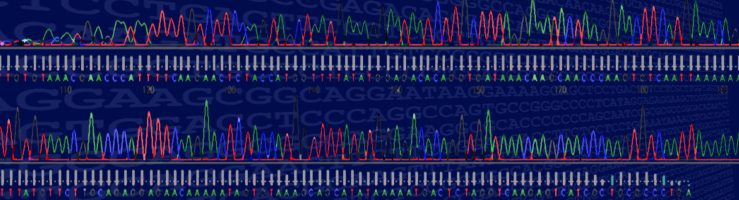
Traditional Sanger sequencing techniques are used to interrogate gene sequences in a step wise fashion; in complex disease where multiple genes are involved this can lead to costly and lengthy investigations. The advantage of next generation sequencing platforms is their ability to sequence many genes in parallel. Applied in the clinical setting this enables rapid diagnosis and timely decisions on appropriate treatment pathways.
Sample Type: 4.5ml EDTA blood or 4µg of DNA suspended in TE buffer at a concentration of = 50ng/µl
Sequencing: Illumina MiSeq, sequencing at a read depth of 50x for a minimum of 98% of the bases
Confirmation: Bi-directional Sanger sequencing confirmation of mutation positive samples
Reporting times: 6-8 weeks
Alport Syndrome
Alport syndrome (AS) is an inherited, progressive disorder of renal, ocular and cochlear basement membranes. Clinically, it presents as a progressive inherited nephropathy. Symptoms include haematuria, proteinuria, high blood pressure, possible deafness and possible vision problems.
Alport Syndrome is a genetically heterogeneous disease arising from mutations in the genes coding for basement membrane type IV collagen. Mutations in any of these genes prevent the correct production or assembly of the type IV collagen network. Using massively parallel sequencing technologies all multiple genes can be sequenced simultaneously providing a rapid and cost effective service.
Features of the NewGene Alport Syndrome multigene panel
Aortopathy Panel
Aortopathies are a group of complex, related disorders with overlapping phenotypes and genetic heterogeneity. They can be characterized by aneurysms, dilation, and tortuosity of the aorta that occur as a result of disruption to the genes involved in connective tissues and those related to the structure and function of the aortic wall.
Aortopathy can be treated using targeted therapy and/or appropriate interventional surgery, therefore an accurate genetic diagnosis is important. The NewGene Aortopathy panel includes 15 genes implicated in the following disorders:
Genes included in the assay:
FBN1, TGFBR1, TGFBR2, ACTA2, SMAD3, MYH11, COL3A1, EFEMP2 (FBLN4), FBN2, MYLK, NOTCH1, SLC2A10, FLNA, TGFB2, SKI.
Features of the NewGene Aortopathy Panel
Hereditary Breast Cancer - BRCA 1 and BRCA 2
Over 40,000 new cases of breast cancer are recorded each year in the UK. Most of these arise from sporadic mutations, however up to 10% are due to inherited mutations in breast cancer susceptibility genes. Full mutation screening for BRCA 1 and BRCA 2 is currently available for those patients who are considered to be at high risk (>20%).
Features of NewGene's Breast Cancer Test:
RASopathy gene panel
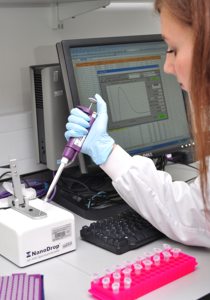
Introducing direct delivery of the NewGene RASopathy gene panel, a comprehensive diagnostic test for all Noonan spectrum disorders.
Based on next generation sequencing technology the RASopathy Test simultaneously screens all coding regions and splice sites of 15 genes for the mutations causative of all the RASopathy disorders. This comprehensive test replaces the current multi-stage strategy that is both time-consuming and costly and reduces the likelihood of missed molecular diagnosis.
Genes included in the assay:
PTPN11, BRAF, SOS1, RAF1, KRAS, HRAS, NRAS, SHOC2, CBL, SPRED1, MAP2K1, MAP2K2, RIT1, A2ML1 and NF1.
Features of the RASopathy gene panel
Familial Hypercholesterolaemia
Familial Hypercholesterolaemia (FH) is a genetic disorder characterised by high LDL-cholesterol levels causing premature cardiovascular disease. Although one of the commonest inherited conditions, affecting around 1 in 500 people, it is asymptomatic and therefore under-diagnosed with 85% of those affected remaining unidentified (Marks et al, 2004).
The key to improving outcomes is early identification and initiation of treatment, effectively eliminating the excess cardiovascular risk (Betteridge et al, 1999; Neil et al, 2008; Vermissen et al, 2008).
NewGene offers a two step testing regime with a rapid low cost genotype assay for common mutations, followed by full gene sequencing if required. In the North East and North Cumbria region the clinical phenotype as measured on the Dutch Clinic Score is used to determine the testing process.
Features of the NewGene Familial Hypercholesterolaemia Service:
Samples
All samples for testing should be submitted to the Northern Genetics Service, Newcastle Upon Tyne Hospitals NHS Foundation Trust.
Reporting
Referring clinicians will receive a fully interpreted report that has been approved by an HCPC registered Clinical Scientist from the Northern Genetics Service.
Hereditary forms of Colorectal Cancer
Most people who develop bowel cancer have no family history of the disease, however for around 25% of all bowel cancer cases diagnosed in the UK there are affected family members. The 2 most common inherited colorectal cancer syndromes are hereditary nonpolyposis colorectal cancer (HNPCC) and familial adenomatous polyposis (FAP).
Hereditary nonpolyposis colorectal cancer (HNPCC) is the most common form of hereditary colon cancer, accounting for about 3% of all colorectal cancer diagnoses each year. If a patient has a mutation in an associated gene their risk of being affected is very high. It also leads to increased risk of other cancers; kidney, ovarian, uterine, renal pelvis, small intestine, and stomach cancer.
Familial adenomatous polyposis (FAP) is a rare condition characterized by the presence of hundreds or even thousands of benign polyps, or growths in the large intestine. It is thought to be present in about 1% of all people diagnosed with colorectal cancer each year.
Features of NewGene's HNPCC Test:
Features of NewGene's FAP Test:
For both tests Multiplex Ligation Dependent Probe Amplification (MLPA) will be carried out to detect deletions and insertions.

...rapid diagnosis
and timely decisions
on appropriate
treatment pathways

NewGene Ltd
Bioscience Building, International Centre for Life, Newcastle upon Tyne, NE1 4EP, UK
Tel: +44 (0)191 242 1923 | Fax: +44 (0)191 241 8799 | Email: [email protected] | Web:www.thenewgene.org
© NewGene Limited | Company Number: 06735445
NewGene partners

